
Commission for freedom of religion condemns Milorad Dodik's anti-muslim hate speech and the desecration of The Liska Harem cemetery in Mostar
- Published in
- Category: LATEST NEWS
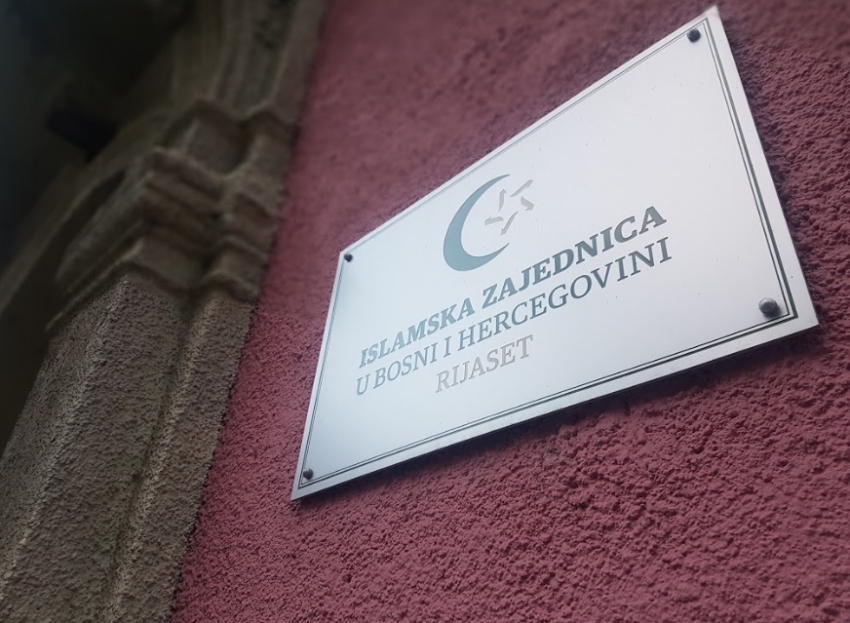
Calls on public authorities to fulfil their positive obligation to effectively investigate and prosecute hate speech and hate crimes
The Commission for Freedom of Religion of the Riyasat of the Islamic Community in Bosnia and Herzegovina strongly condemns the anti-Muslim and hateful rhetoric used by Milorad Dodik, President of the Alliance of Independent Social Democrats (SNSD), during the commemoration of the 1942 Battle of Kozara held on 11 July 2026, the International Day of Reflection and Commemoration of the 1995 Genocide in Srebrenica.
During his speech, Mr. Dodik used the occasion to repeat a series of statements targeting Muslims in BiH as a religious community. These included denying the genocide committed in Srebrenica by describing the murder of more than 8,000 Bosniak Muslims in and around Srebrenica in July 1995 as a “heinous lie” and claiming that legal and historical characterisations of those crimes are based on falsehoods. He also denied the any suffering of Muslims during the Second World War, asserted that Muslims had collectively supported the Ustaša regime and participated in crimes against Serbs, and portrayed Bosnian Muslims as historically responsible for atrocities committed during that period.
Mr. Dodik further warned of the alleged threat posed by Muslim “radicalism” and political Islam. Among other claims, he alleged that Islamic fundamentalism is responsible for terrorist activities worldwide, and claimed that European Muslim politicians would form an alliance with Muslims in Bosnia and Herzegovina. He concluded by stating that “not all Muslims are terrorists, but all terrorists are Muslims.” On 13 July 2026, he further stated that Christians in Bosnia and Herzegovina are “under pressure from Muslims in Bosnia and Herzegovina.”
The European Court of Human Rights has recognised that speech associating an entire religious group with serious criminal conduct constitutes vehement attack against a religious group. As such it is incompatible with the values proclaimed and guaranteed by the ECHR, notably tolerance, social peace and non-discrimination.
The Commission considers that Mr. Dodik's statements, which rely on prejudice and harmful stereotypes, constitute a further escalation of his long-standing hostility towards Muslims. By portraying the Muslim community as a collective threat, his speech encourages rejection, exclusion and hostility towards Muslims and deepens divisions between religious communities in Bosnia and Herzegovina. It presents the political participation of Muslims as a danger to the survival of the Serbian people, thereby undermining social cohesion, mutual understanding and peaceful coexistence.
The Commission further considers that the systematic and persistent nature of Mr. Dodik's public statements is aimed at degrading the dignity of Muslims as a religious community and normalising hostility towards them. In the specific context of Bosnia and Herzegovina, where Muslims constitute a vulnerable group in Republika Srpska, such rhetoric creates a significant risk of inciting discrimination, hostility and violence.
The Commission recalls that the competent public authorities, particularly the Public Prosecutor's Office and the police in Republika Srpska, have a positive obligation under the ECHR to provide effective protection against hate speech, including, where appropriate, through criminal law. Failure to respond effectively to public incitement to hatred, intolerance and discrimination may result in a violation of the ECHR, which enjoys constitutional status in Bosnia and Herzegovina and is directly binding on all public authorities.
The European Court of Human Rights has consistently held that the criminal justice system must respond effectively to verbal attacks motivated by discriminatory attitudes and ensure adequate protection of the dignity of individuals and groups targeted by such attacks. The continued tolerance of Mr. Dodik's anti-Muslim rhetoric is therefore deeply concerning.
The Commission also strongly condemns the desecration of the Liska Harem cemetery in Mostar on 13 July 2026 through the placement of a pig's head in the cemetery. As noted by the OSCE, such conduct represents a classic form of anti-Muslim intimidation and religiously motivated hatred.
The Commission recalls that, according to the case-law of the European Court of Human Rights, the existence and preservation of cemeteries fall within the protection of the right to freedom of religion, while the dignity and memory of the deceased are protected through the rights to private and family life of their relatives and the wider community. Desecrating a Muslim cemetery by placing a pig's head at the site directly insults the religious beliefs of Muslims and profoundly offends the dignity of the deceased and the feelings of their families.
The European Court of Human Rights has repeatedly recognised that the treatment of the deceased directly affects surviving relatives. The desecration of graves causes serious psychological suffering and interferes with the private life and psychological integrity of family members and the affected community.
The competent authorities in the Herzegovina-Neretva Canton have a positive obligation to treat this incident as a potential hate crime and to conduct a prompt, thorough and effective investigation. In particular, they must determine whether the offence was motivated, wholly or in part, by religious or ethnic hatred.
The Commission also calls upon the competent authorities to adopt effective preventive measures to protect the Liska Harem cemetery from further attacks, including appropriate fencing, surveillance systems and other reasonable security measures. Such measures are particularly necessary given the repeated incidents of desecration at the cemetery, including the placement of crosses, graffiti containing fascist symbols, damage to gravestones and monuments, and other acts of vandalism.
Acts of vandalism, hate crimes and interference with the religious freedom and spiritual peace of Muslim families in Mostar have been tolerated for far too long.
The Commission therefore calls upon the authorities of Republika Srpska and the Herzegovina-Neretva Canton to fulfil their positive obligations by conducting effective investigations into both Mr. Dodik's public statements and the desecration of the Liska Harem cemetery, paying particular attention to evidence of religious or ethnic hatred. Both incidents have consequences that extend beyond the immediate victims, affecting the wider Muslim community and undermining its members' sense of security, dignity and equal citizenship.
Both incidents violate the principle of the inherent dignity of every human being and undermine the right of Muslims in Bosnia and Herzegovina to live free from fear, as recognised in the Preamble to the International Covenant on Civil and Political Rights. Any further tolerance of these repeated crimes by the competent public authorities is unacceptable. Continued failure to effectively investigate, prosecute and prevent these crimes will compel the Islamic Community to seek the protection of its rights before the Institution of Human Rights Ombudsman of Bosnia and Herzegovina, as well as other national, regional and international human rights protection mechanisms.